

Explore Your Biological Stress.
Understand Your Systemic Chronic Inflammation.
The suPARbio™ Systemic Chronic Inflammation Test measures the concentration of suPAR (soluble urokinase plasminogen activator receptor) in your blood. suPAR is a biomarker associated with immune activation and systemic inflammation.
For informational purposes only. This test is not a medical diagnostic.

Research Driven. Internationally Validated.
As of Spring 2026, the suPARbio™ Systemic Chronic Inflammation Test is offered in the United States as a Laboratory Developed Test (LDT) performed in a CLIA-certified laboratory. The test has not been cleared or approved by the U.S. Food and Drug Administration. At this time, this test is not available for residents of the State of New York.
suPAR has been extensively studied internationally since its discovery. More than 1,000 peer-reviewed publications have examined its relationship with immune activation and systemic inflammatory processes.

Insights from the Century Project: suPAR, a New Biomarker of Aging and Inflammation
The Guggenheim report analyzes and reviews the different factors that can influence our potential longevity and, in particular, our healthspan, defined as the period of time that we live free of any chronic disease.
What is the suPARbio Age Index?
Systemic chronic inflammation has been widely studied for its potential role in the aging process, often referred to as “inflammaging”. This concept explores how immune activity may relate to biological aging.
suPAR levels naturally rise with age in healthy people. Your suPARbio Age Index* provides a statistical comparison between your measured suPAR level and reference data from healthy individuals of the same sex. It estimates the chronological age at which a similar suPAR level is commonly observed.
If your Index value is higher than your actual age, it suggests that your suPAR level is elevated relative to age-matched reference populations.
The suPARbio Age Index is a statistical estimate derived from population-level data and should not be considered a direct or definitive measure of biological or physiological age. Reference ranges are derived primarily from Northern European populations and may not be directly applicable to individuals from other ethnic, geographic, or demographic backgrounds.
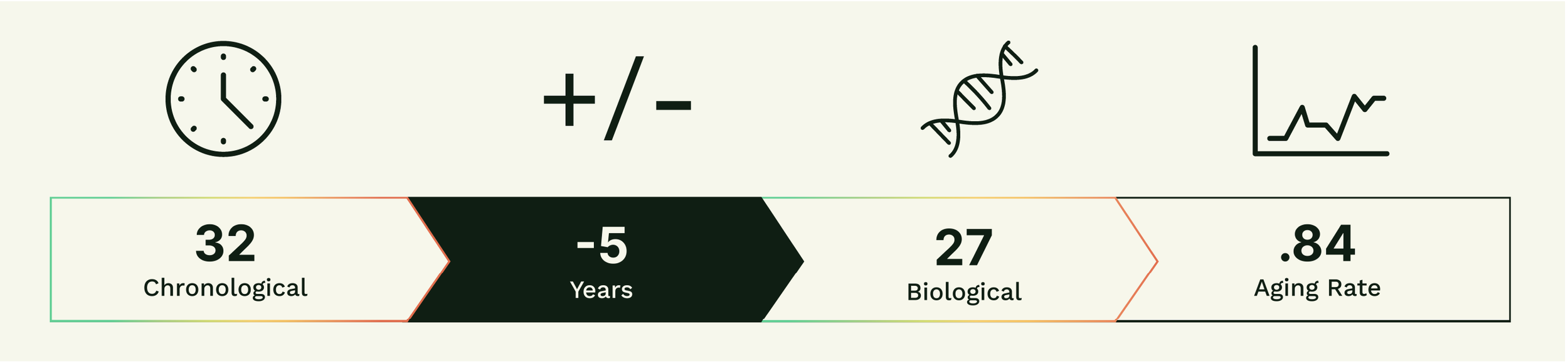
The suPARbio Age Index section of your test results includes your chronological age and statistical estimates labeled as “biological age” and “rate of aging,” which are derived from comparisons to reference population data. Reference data based on healthy Danish blood donor population (n=9,303, ages 18-65).
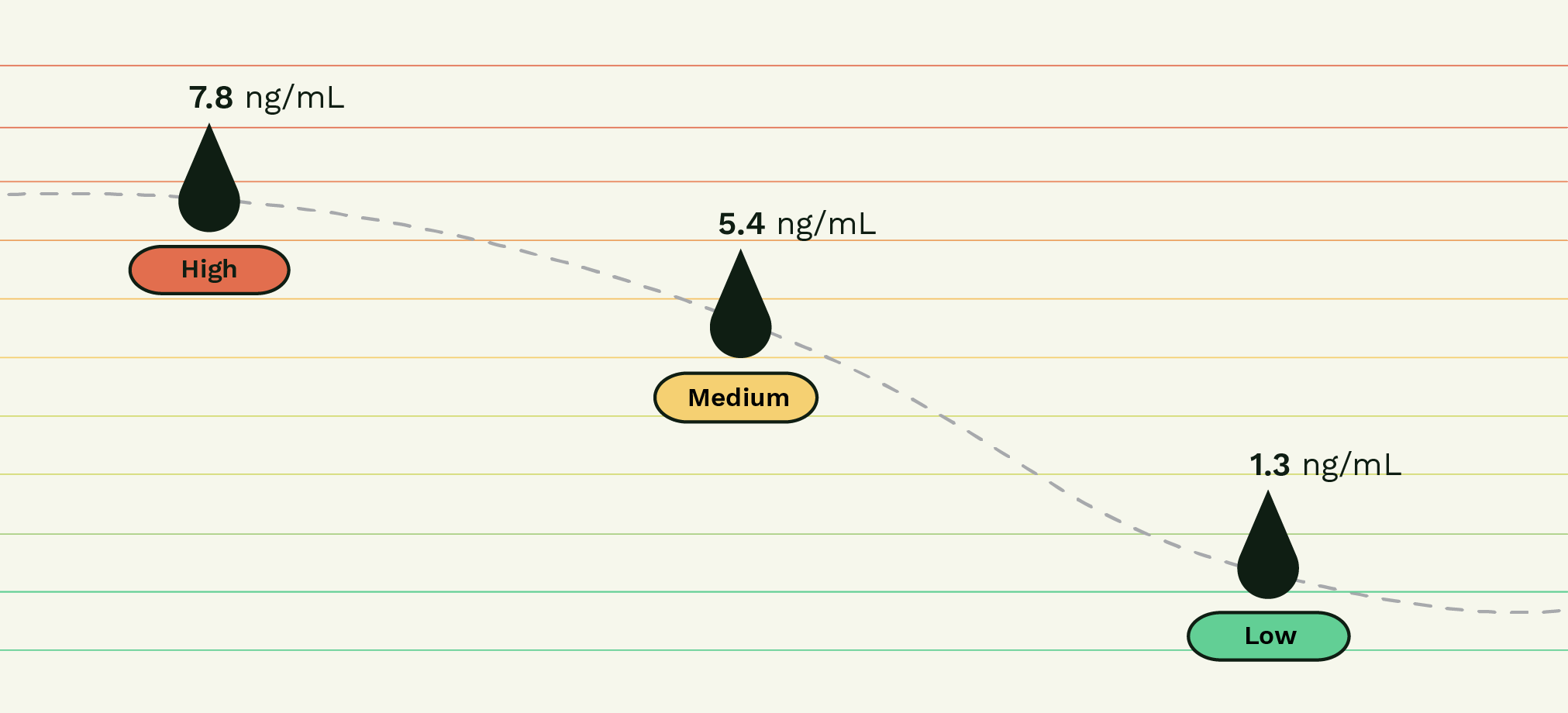
Understanding Systemic Chronic Inflammation Over Time With suPAR
Systemic chronic inflammation is a persistent, low-grade inflammatory state that is thought to play a role in the development and progression of many chronic diseases.
Research demonstrates that suPAR can provide prognostic information about disease risk that is independent of and additive to other inflammatory markers such as CRP.
A Simple Process
to Get Tested

Step 1:
Register Your Test
Scan the QR code to link your sample to your account. If this is your first test, you will be prompted to create a login to access your results.

Step 2:
Blood Draw
You can have your blood drawn at your doctor's office, a local lab, or right at home by a licensed healthcare professional as available in your area.

Step 3:
Sample Preparation
After blood collection, the healthcare professional uses a centrifuge to separate the plasma.

Step 4:
Sample Shipment
The plasma sample is carefully packaged and securely shipped to a CLIA-certified laboratory for suPAR testing.

Step 5:
Receive Results
Access your test results through our secure online portal. Results are typically available within 7 days.
FAQs
-
suPAR (soluble urokinase plasminogen activator receptor) is a protein released from cells that reflects the level of systemic chronic inflammation in your body. Systemic chronic inflammation is a persistent, low-grade inflammatory state that plays a major role in the development and progression of many chronic diseases.
-
Unlike acute inflammation markers (such as CRP) that spike with infections or injuries and quickly return to normal, suPAR provides a stable measure of your underlying systemic chronic inflammatory state. Research demonstrates that suPAR provides prognostic information about disease risk and mortality that is independent of and additive to other inflammatory markers, such as CRP
-
Step 1: Order and Register Your Test
Scan the QR code to link your sample to your account. If this is your first test, you will be prompted to create a login to access your results.
Step 2: Blood Draw
You can have your blood drawn at your doctor's office, a local lab, or right at home by a licensed healthcare professional as available in your area.
Step 3: Sample Preparation
After blood collection, the healthcare professional uses a centrifuge to separate the plasma.
Step 4: Sample Shipment
The plasma sample is carefully packaged and securely shipped to a CLIA-certified laboratory for suPAR testing.
Step 5: Receive Results
Access your test results through our secure online portal. Results are typically available within 7 days.
-
The suPARbio Age Index reflects the age at which your measured suPAR level is typically observed among healthy individuals of the same sex. This estimate is based on reference data from 9,303 healthy adults aged 18-65 years.
-
Research indicates that lifestyle changes may influence suPAR levels. Repeated testing over time can help you and your healthcare provider assess whether these changes are having a positive impact.