
Biomarker for Systemic Chronic Inflammation
The suPARbio™ Systemic Chronic Inflammation Test is designed to measure levels of soluble urokinase plasminogen receptors (suPAR), a biomarker associated with systemic chronic inflammation. The test provides quantitative measurement of suPAR levels in blood, offering information that may support discussions with healthcare professionals regarding overall health and wellness status.
Easy Test Process
Blood Sample
A qualified healthcare professional safely collects a blood sample and sends it securely to our laboratory for analysis.

Laboratory Analysis
Your sample undergoes a detailed laboratory analysis to accurately measure the concentration of suPAR present in the blood.

Get the Results
Results are typically available in your secure profile within approximately 7 days after the sample is received and analyzed, allowing you to review and discuss the findings with your healthcare practitioner.

What Does the suPARbio™ Systemic Chronic Inflammation Test Measure?
The test measures the concentration of soluble urokinase plasminogen activator receptor (suPAR), a biomarker associated with systemic chronic inflammation and immune system activation.

Indicator of Immune Activation:
Elevated suPAR reflects immune system activity. Observational studies have reported that higher suPAR levels are associated with conditions such as cardiovascular disease, type 2 diabetes, chronic kidney disease, and other age-related conditions. The suPAR Systemic Chronic Inflammation test is intended for research or informational purposes only and is not meant to diagnose, predict, or treat any disease.

Systemic Chronic Inflammation:
Systemic chronic inflammation refers to a persistent, low-grade inflammatory state that has been linked with the development and progression of certain chronic conditions. It is not intended to diagnose or predict any disease.

Stable Biomarker:
suPAR levels have been reported to remain relatively stable in the blood over time and are generally not materially affected by short-term factors such as time of day, recent food intake, or commonly used over-the-counter medications, including non-steroidal anti-inflammatory drugs (NSAIDs), nor by minor acute events such as small physical injuries.

Lifestyle Influences:
suPAR levels may be influenced by long-term lifestyle factors. Evidence suggests that lifestyle interventions, such as improvements in diet, regular physical activity, stress management, and smoking cessation - may contribute to changes in suPAR levels over time.
How to
Read the Results
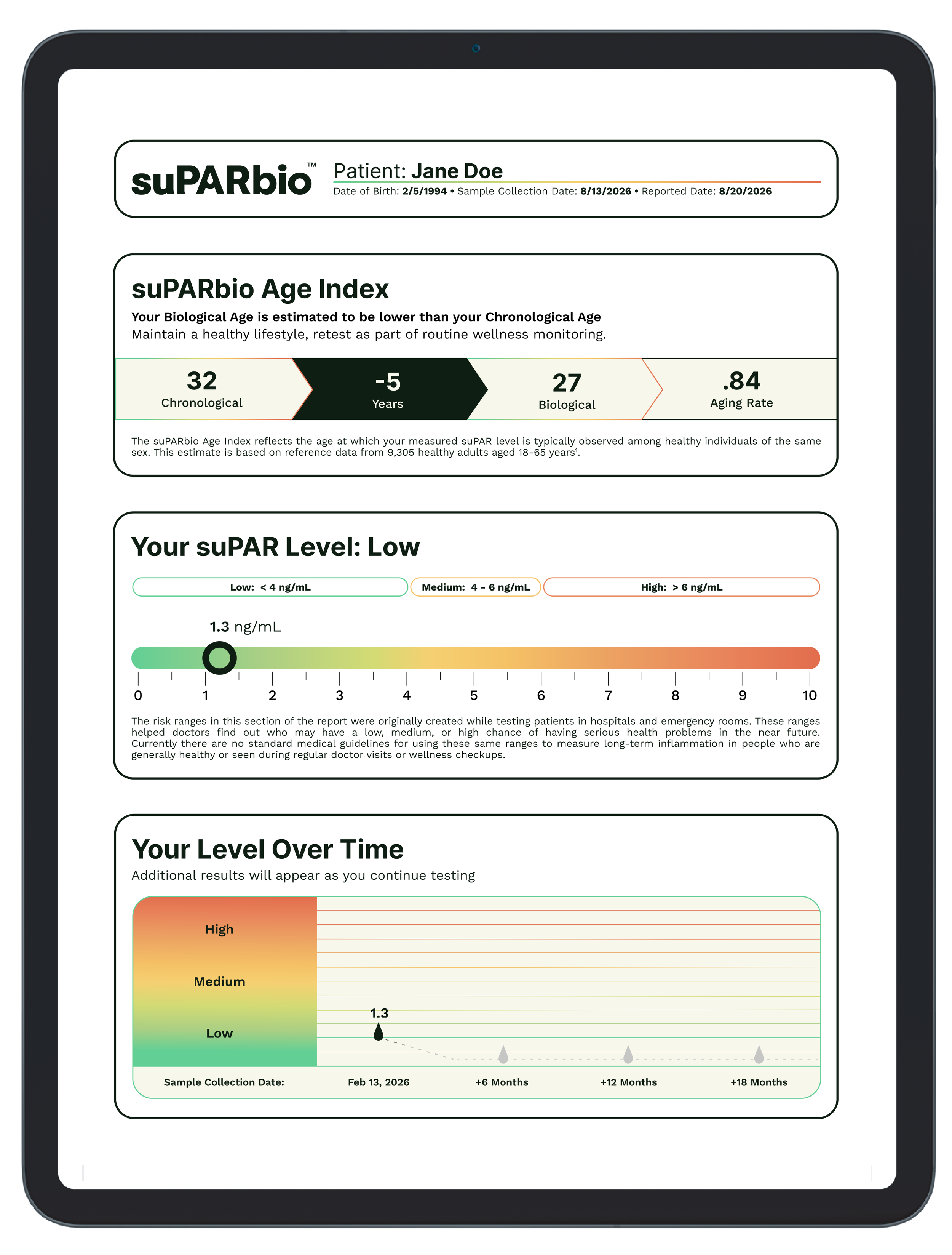
Your results include two key values:
suPAR concentration (ng/mL): The measured concentration of suPAR in your blood, reported in nanograms per milliliter (ng/mL)
suPARbio Age Index: A calculated indicator that compares your estimated biological age with your chronological age. A biological age higher than your chronological age may suggest increased biological aging, which has been associated with elevated levels of systemic chronic inflammation.
This test has been validated as a Laboratory Developed Test (LDT) under CLIA regulations. It has not been cleared or approved by the U.S. Food and Drug Administration (FDA) and is not intended to diagnose, treat, cure, or prevent any disease or medical condition. Test results should be interpreted by a qualified healthcare provider in the context of the patient’s clinical history, symptoms, and other laboratory findings. At this time, this test is not available for residents of the State of New York.
Understanding Inflammaging
Inflammaging refers to the complex biological process where systemic chronic inflammation accelerates the aging process and contributes to age-related diseases.
This phenomenon links systemic chronic inflammation to various chronic diseases and is crucial for developing strategies that mitigate these risks and promote healthier aging.
How suPAR Compares to Other Biomarkers?
suPAR can provide prognostic information about disease risk that is independent of and additive to other inflammatory markers such as CRP.
Furthermore, suPAR's stability in the bloodstream makes it well-suited for tracking the effects of health interventions.
FAQs
-
The suPARbio™ Systemic Chronic Inflammation Test has been validated under CLIA regulations for Laboratory Developed Tests (LDTs). It has not been cleared or approved by the U.S. Food and Drug Administration (FDA).
-
Yes, the suPAR biomarker stands on 20+ years of bioscience. For a detailed look at the supporting scientific papers, please visit our Scientific Research page to learn more about how the test has been developed and validated.
-
Lower suPAR levels following lifestyle changes have been associated with a reduced risk of disease.
Stress Management
Healthy Diet
Smoking Cessation
Physical Activity
Weight Management
-
A suPARbio Age Index higher than your actual age may suggest relatively higher levels of systemic chronic inflammation, while a lower suPARbio Age Index may indicate lower levels.
This calculation is based on reference data from 9,303 healthy Danish blood donors aged 18-65 years